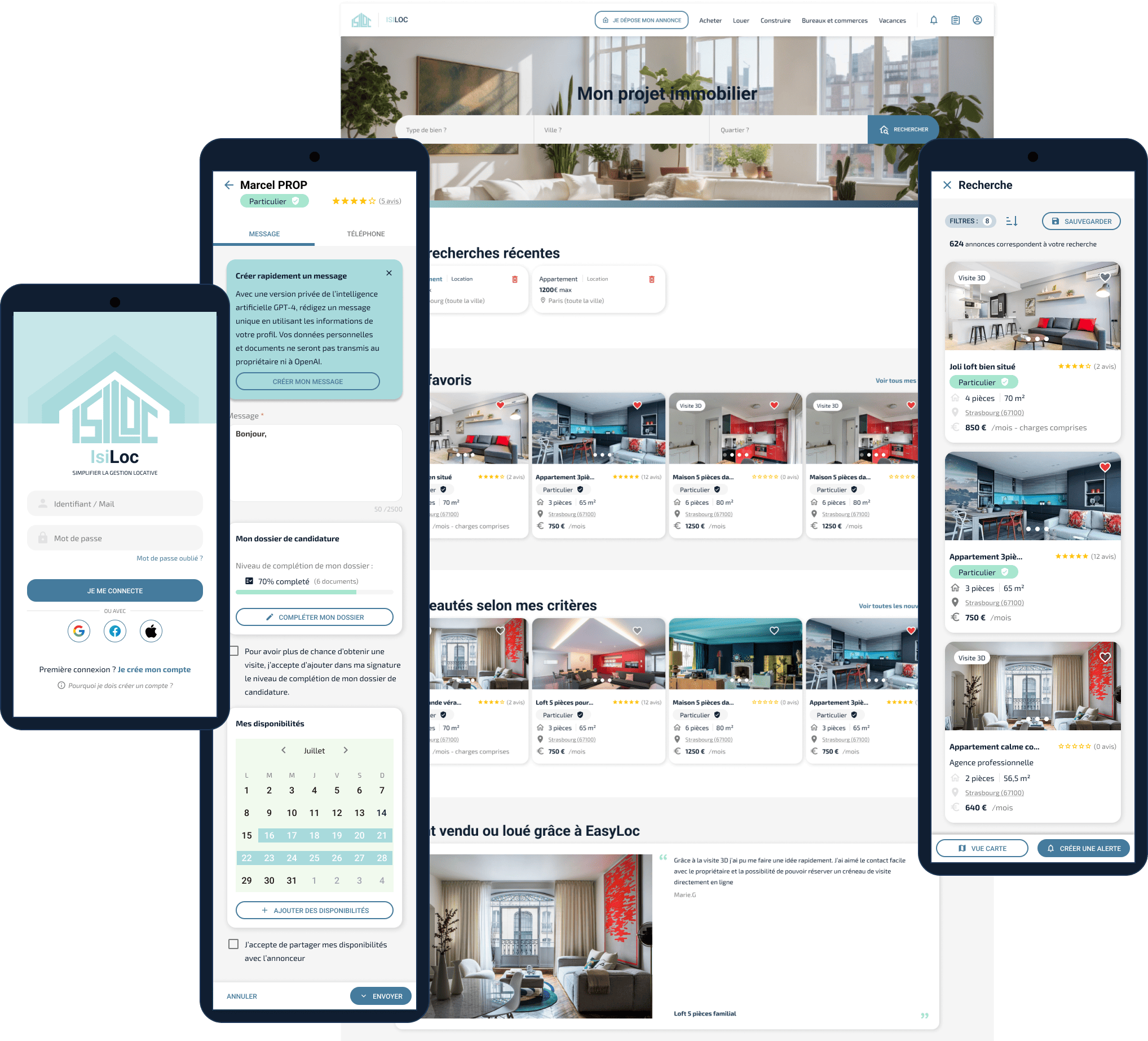
Generally, I don’t showcase my school projects, but since I completed this one as part of my UX certification, and it includes my end-to-end methodology on a project, I thought it would be valuable to present it in this portfolio. It’s a mobile application for property owners and tenants that integrates features such as ad filtering, candidate screening, built-in communication, a dashboard, and overall rental management, including rent collection, scheduling maintenance, and maintenance notifications. It was completed in a relatively short time frame (5 weeks) and is based on user feedback from a panel of 5 participants. It will not be developed further.
Problem
The main issue that emerged from my research and interviews was centered around simplifying the apartment search process: how to save time when looking for a rental and ensure that the listing is genuine.
Goal
Enhancing the efficiency of rental searches for tenants, simplifying ad management and candidate selection for landlords, and strengthening transparency and trust between tenants and landlords.
Responsabilites
- Create an oral presentation with slides, a functional mockup, and a prototype.
- Conduct user research, including personas, experience maps, and user flows.
- Perform a complete design studio process, including functional mockups, user testing, and iterations.
My role
UX researcher and designer
User research
To identify and validate the frustrations experienced by tenants and landlords in property management, I employed several approaches: Online sources (market studies, reports, and blog articles), Forums & social media, my surveys & interviews and online reviews & comments.
4 850 000
Rental housing in France in 2021
79 %
look for customer reviews before renting or buying
54,5 %
of applicants would place greater importance on listings if they were verified by a platform
“LeBonCoin”
leboncoin, followed by "SeLoger" and "PAP," are the most used platforms in France
28 %
of rental applicants have encountered fraudulent or misleading listings
48 %
interest rate for a listing with a virtual tour compared to 24% with a simple description
Pain points
1
Complex application processes
The collection and submission of all necessary documents (pay slips, tax notices, recommendation letters, etc.) can be tedious. Submitting multiple applications and either receiving no response or facing rejections can be discouraging. Additionally, issues such as discrimination, racism, and sexism still persist.
2
Transparency issues
Listings can sometimes be misleading or lack essential details, leading to disappointing visits or hidden defects that may only be discovered after signing the lease (e.g., mold, unsanitary conditions). Photos in listings may be overly enhanced and fail to reflect reality. There may also be a lack of transparency regarding additional fees tied to poor property management by the landlord or agency.
3
Communication problems
Real estate agents or landlords may be slow to respond to inquiries or applications. There is often a general lack of clarity regarding responsibilities and expectations. Even after securing an apartment, tenants may experience delayed or non-existent responses from landlords.
User personas
Given the time constraints and limited user panel, I conducted a user survey with 20 participants and interviewed 2 individuals. For my personas, I chose to create proto-personas that consolidate all the key themes identified from the survey and interviews.
Estelle owns two apartments in downtown Strasbourg, which she rents out to generate extra income.
She acquired these properties as a long-term investment for her retirement and to secure passive income.
Busy with work and family responsibilities, she has limited time to manage her properties.
She uses online platforms like SeLoger, Leboncoin, and Airbnb to post her listings.
She frequently consults forums and landlord groups to get advice and recommendations.
GOALS
Why does she use the tool?
Estelle wants to rent out her apartments quickly to reliable tenants.
Maximize the return on her real estate investments while minimizing the effort and time spent on property management.
Ensure proper maintenance of her properties and avoid issues with unpaid rent.
NEEDS & FRUSTRATIONS
What does she need to accomplish with the tool? What does she need?
Estelle needs a simple and efficient rental process that doesn’t require too much involvement on her part.
She wants to ensure tenant reliability to avoid issues like unpaid rent and property damage.
She seeks to stay informed about best practices and legislative changes in property management.
What could prevent her from achieving her goals? What are her concerns?
Estelle finds the process of screening and verifying tenants long and tedious.
Administrative tasks and paperwork associated with property management are a source of stress for her.
She worries about having to relist and manage her ad each time a tenant leaves and about all the procedures involved.
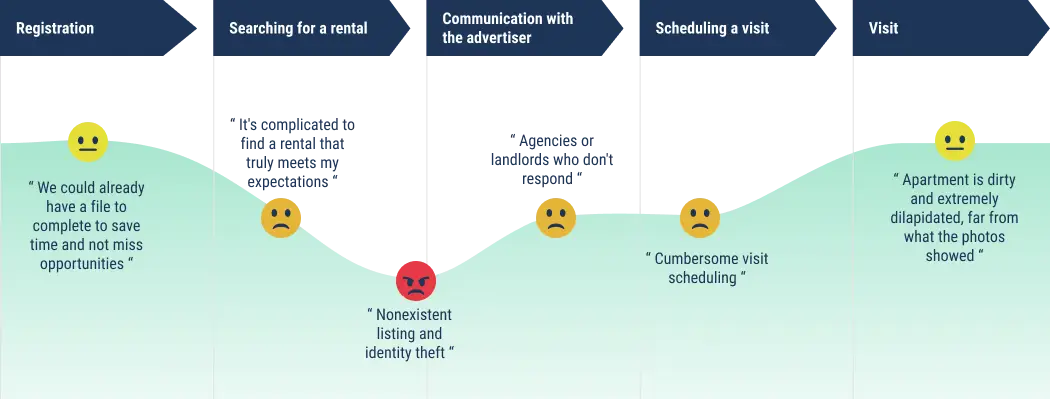
User journey map
(Summary)
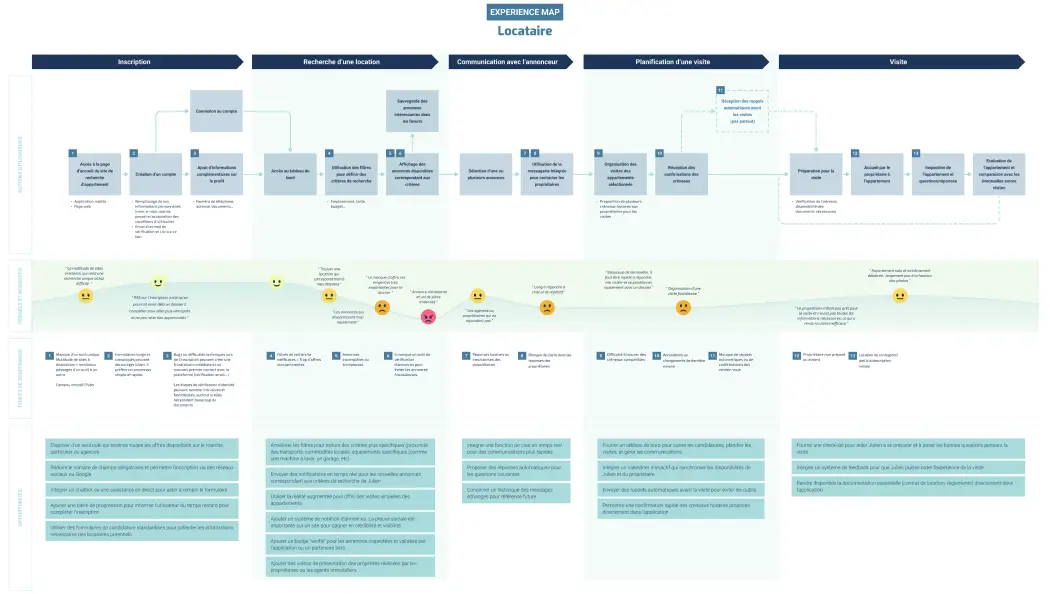
Following a comprehensive Job To Be Done table, I created two experience maps based on the profiles of Julien and Estelle. It is a simplified version of Julien's experience map. By understanding the pain points highlighted in the experience map, we can design an application that enhances Julien's user experience by
Making visit scheduling more flexible and efficient
User journey map
(full size in french)
This is a screenshot of the more detailed version of Julien's user journey map
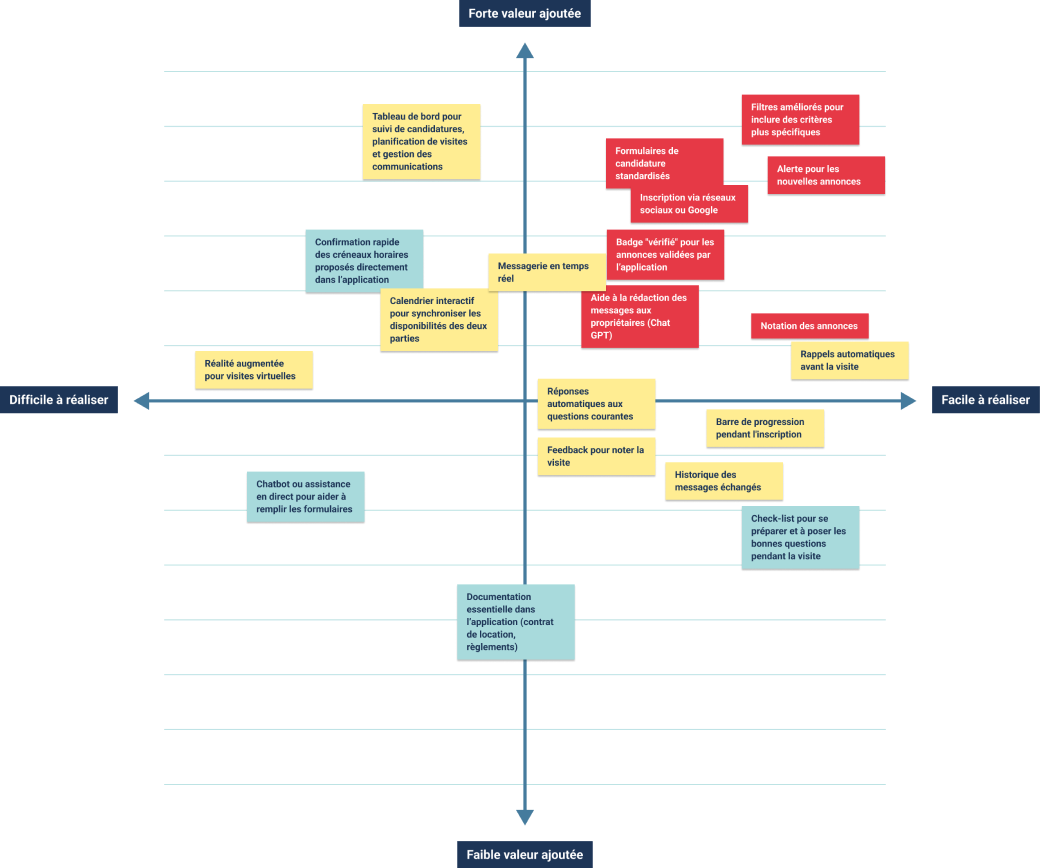
Impact matrix
(in french)
Following my experience map, I proposed a set of features to address the gaps that currently exist. Using this matrix, I prioritized these features based on their added value and ease of implementation within the scope of my project.
Design
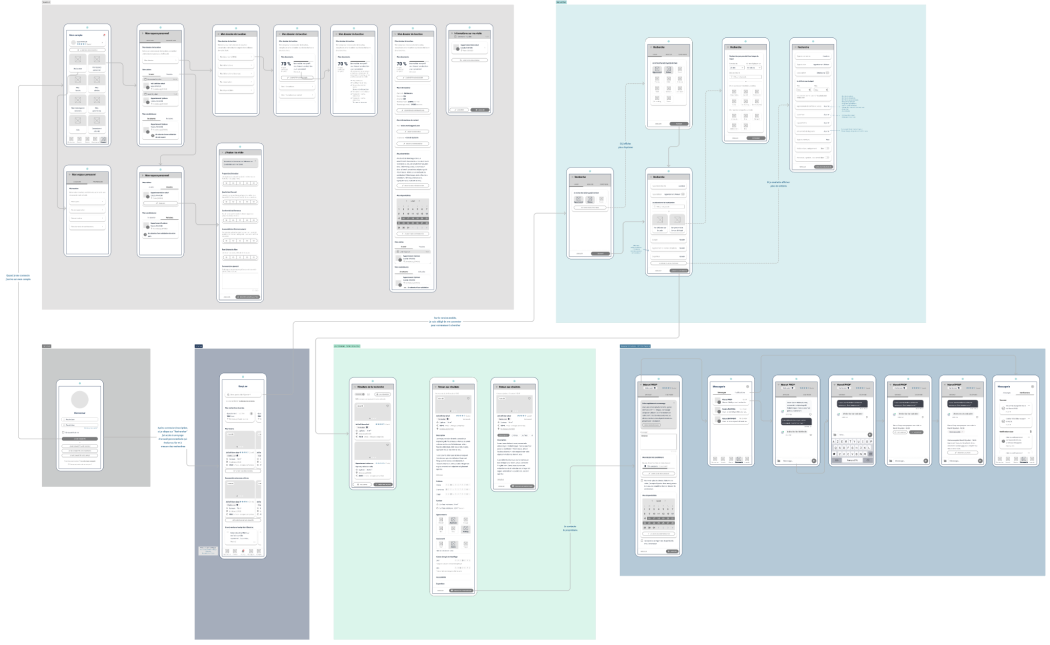
I designed diagrams and storyboards to better understand and structure the information and architecture of the application. After creating paper wireframes, I developed digital wireframes along with a low-fidelity prototype, which allowed me to conduct initial usability studies.
Wireframes
After sketching wireframes on my graphic tablet (we're saving paper here! ), I moved on to the most tedious task of the project on Figma: creating wireframes
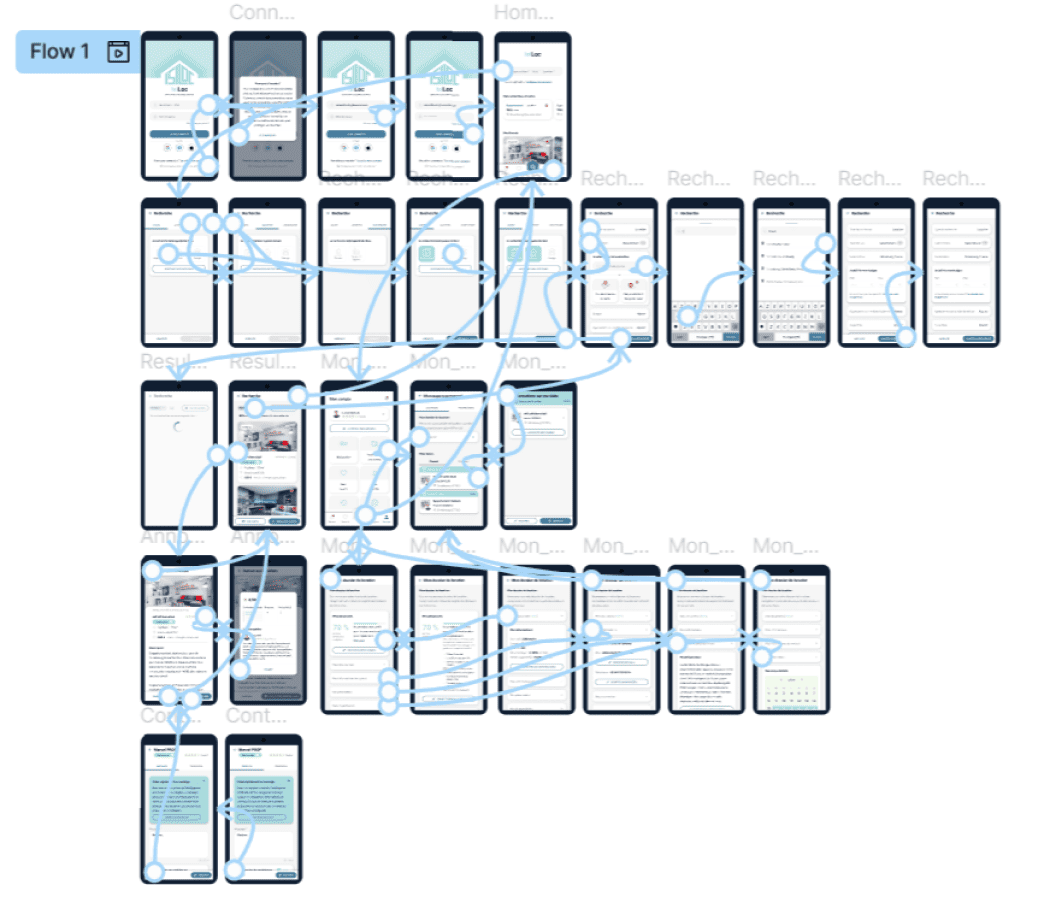
These represent the complete user journey on the future application. No frills, details, or colors here—just a representation of all the pages visible to the user. The idea is to iterate, present the concept to stakeholders, and collaboratively validate a final user flow.
A little more detailed...
Usability testing
To properly conduct UX research, it is essential to iterate multiple times on user journeys and wireframes with the teams, as well as with survey participants and panels of future users. This process helps challenge ideas, gather feedback, and refine objectives
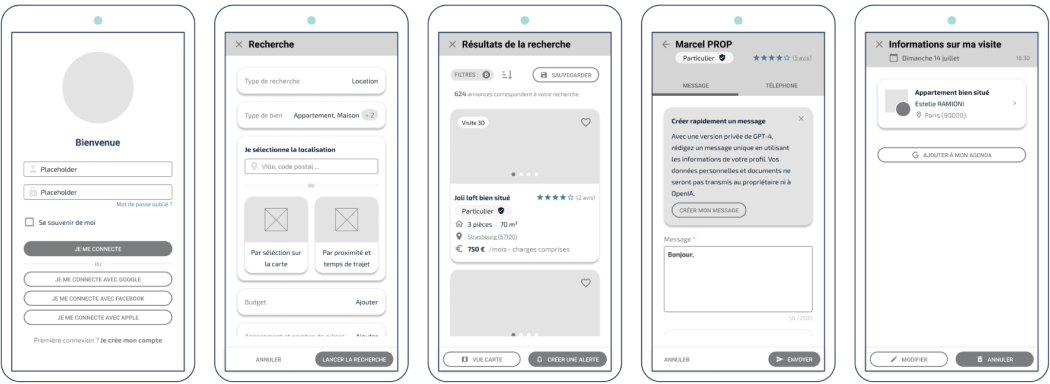
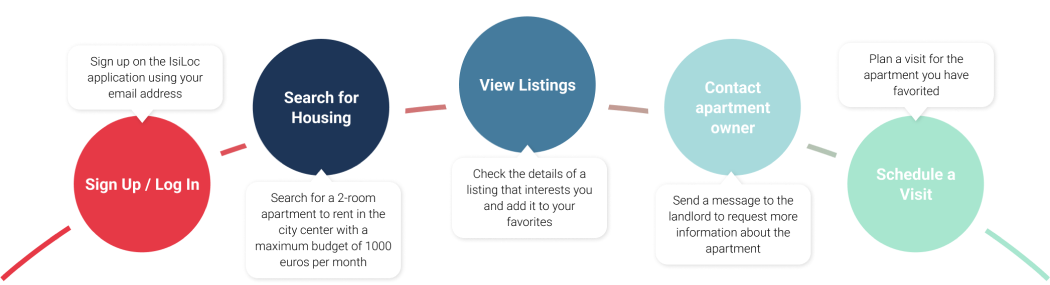
I then asked them several questions about their overall experience: whether the features were easy to find, if anything seemed confusing, what they liked, what they disliked or found frustrating, and whether they would like to see any improvements or additions. Here is the journey I asked them to follow on my wireframes :
Results
Ease of Use
Do they find the application intuitive and easy to navigate?
Efficiency
Were they able to complete their tasks quickly and without errors?
Satisfaction
What is their overall satisfaction level with the application?
Clarity
No major difficulties in navigation. Minimalist design, quick access, nothing superfluous. Beautiful, clear, and clean interface. (Perhaps the messaging page to the landlord has a bit too much content.)
Appreciated Features
Google login
Reviews on visits
Verified landlord profiles
Ability to complete the entire application process online
Missing Features
Adding schedules to the calendar
Ability to compare one or more apartments and have a "matchability" index based on search criteria.
Final design
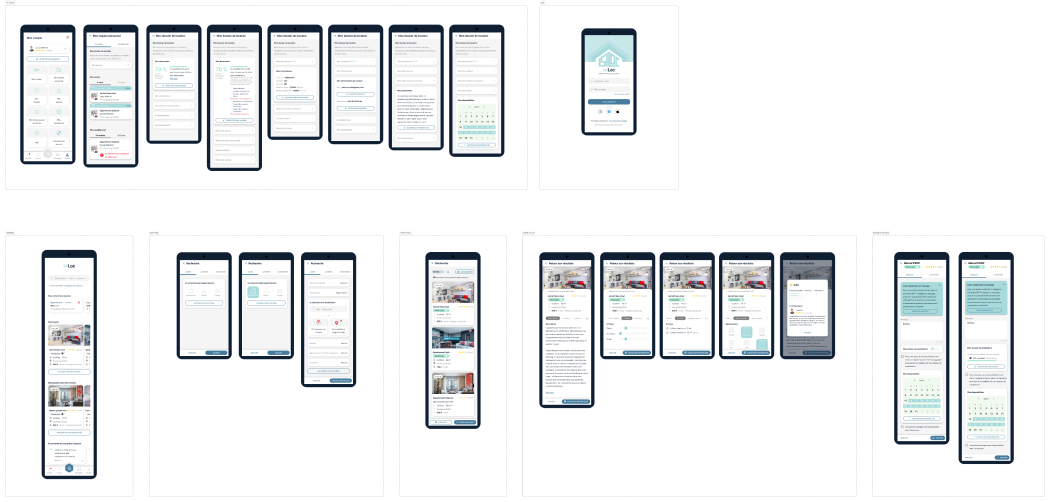
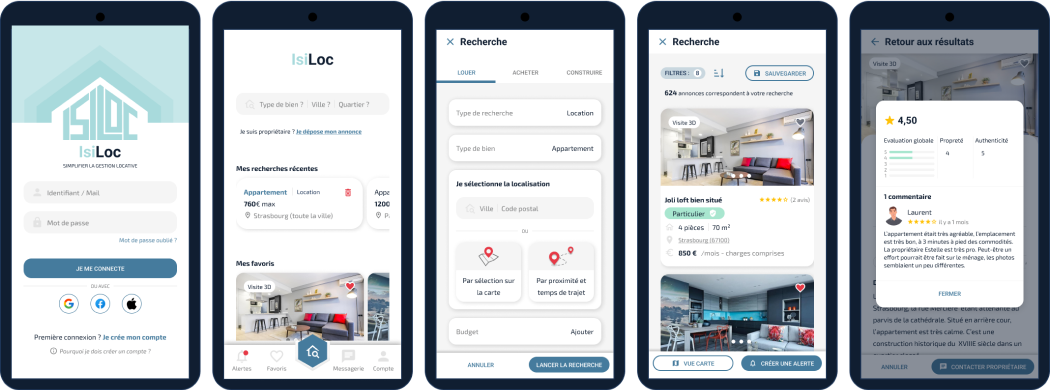
The final step, after validating the wireframes with stakeholders, is to create high-fidelity mockups that will serve as the foundation for the developers. This is a crucial stage where I maintain constant communication with them. Together, we establish the components and technical constraints for potential features or animations.
Mockups
High-fidelity mockups
A little more detailed...
Prototypes
Figma prototypes are interactive mockups that simulate the functionality of an application or website to test and validate user journeys
I transformed my mockups into a test-ready prototype, incorporating gestures and animations
Implementation plan
Here’s how the implementation of the project would unfold on a larger scale
Month 1-2
Development of the Actual Specifications
Define the main features of the application
Set technical requirements and success criteria
Write User Stories
Month 3-4
Organizing Larger-Scale User Testing
Conduct user tests to validate prototypes
Gather feedback and iterate on the design
Month 5-8
Development
Define the application’s technical architecture
Develop the features
Conduct unit, integration, and system tests
Month 9-10
Launch and Marketing
Create a marketing campaign and publish the app on stores